Ramzan 23000 Cash Aid Distribution
Ramzan 23000 Cash Aid Distribution: As Ramadan begins, both the Government of Punjab and the Federal Government of Pakistan have started distributing financial assistance to low-income families. While officials say billions of rupees are being transferred to millions of households, concerns about eligibility criteria and transparency are also emerging from different parts of the country.
Here is a clear and complete breakdown of what is happening, who is eligible, how payments are being made, and why some families are still waiting.
How Much Money Is Being Distributed?
Punjab Government – Ramadan Nigehban Program
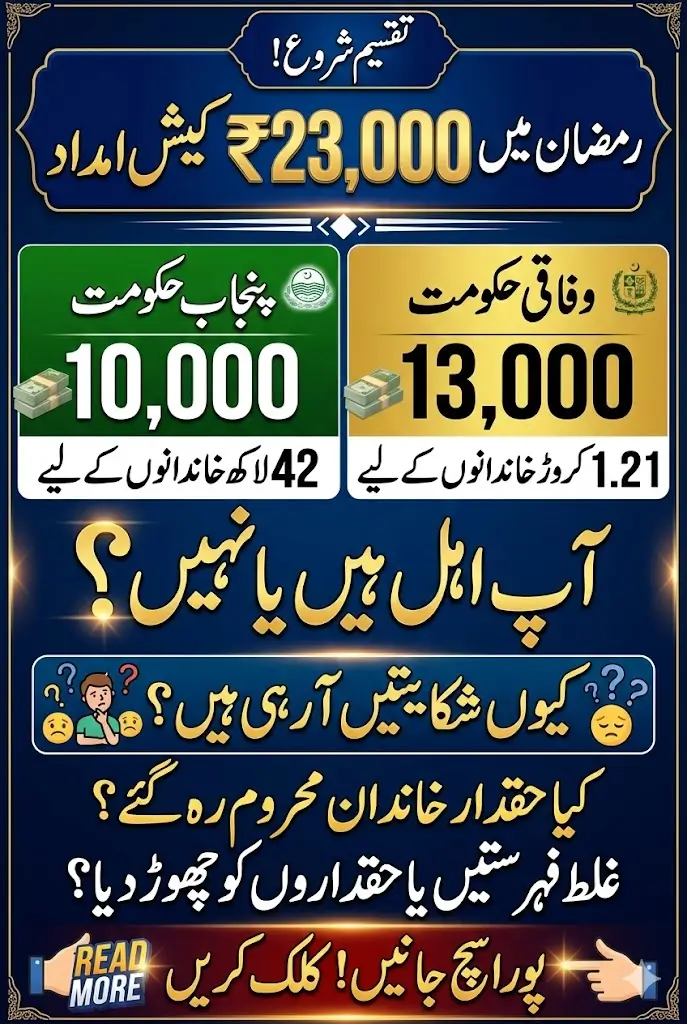
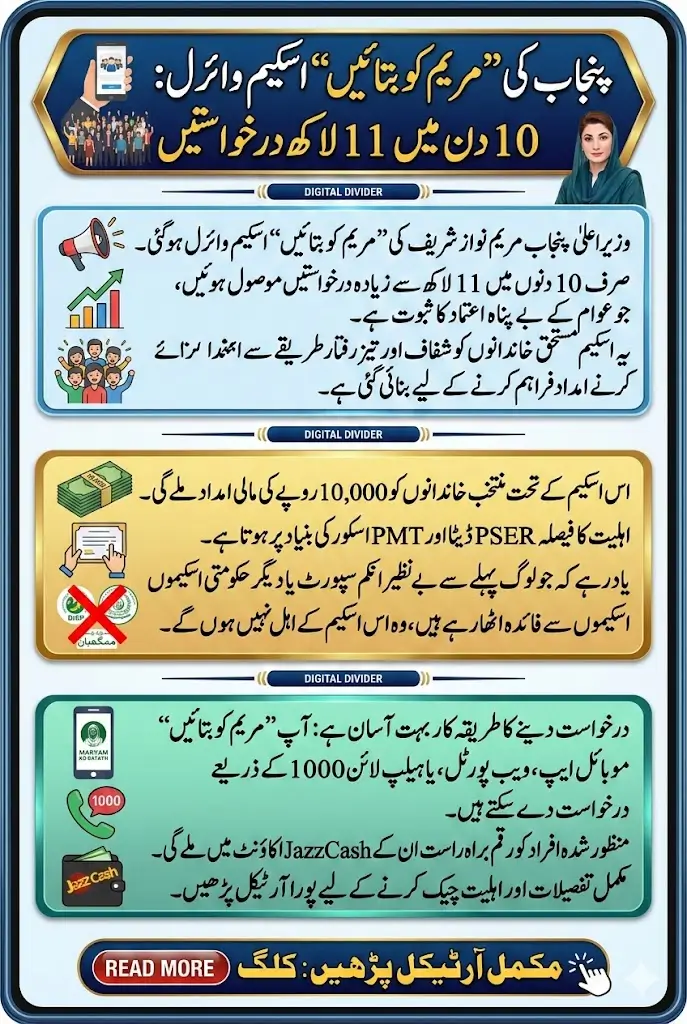
Under the Ramadan Nigehban Program, the Punjab government has allocated approximately Rs 47 billion to support 4.2 million families.
- Each eligible family will receive Rs 10,000.
- Funds are being distributed through verified channels.
Federal Government – National Ramadan Relief Support
The federal government has announced Rs 38 billion for 12.1 million families nationwide.
- Each eligible family will receive Rs 13,000.
- The amount has reportedly been increased compared to last year.
How Are Payments Being Made?
According to officials, payments are being transferred through:
- Bank accounts
- Branchless banking agents
- ATM networks
Authorities say the goal is to ensure transparency and direct transfer to beneficiaries to avoid middlemen.
Why Are Some Families Complaining?
Despite official claims, reports from the ground suggest that some deserving families have not received assistance.
Case 1: Daily Wage Worker Left Out
Muhammad Tahir, a daily wage laborer from Lahore and father of four, says he did not receive assistance last year and has again been excluded this year. He claims no survey team visited his home.
Case 2: Family With Medical Expenses
Muhammad Ansar, originally from South Punjab and currently working as a waiter in Lahore, says he supports a disabled daughter with ongoing medical expenses but still did not qualify. When he contacted the helpline, he was told payments were based on survey data and that a re-survey might be conducted — but no timeline was given.
Case 3: Ineligible Person Selected
In contrast, a Lahore resident named Asif said he was called last year to collect Rs 10,000 from his Union Council office, even though his monthly income exceeds Rs 100,000 and he never applied for aid. This has raised serious questions about the accuracy of beneficiary lists.
How Is Eligibility Decided?
Officials from the Punjab Social Protection Authority state that eligibility is determined using data from:
- The National Socio-Economic Registry
- The Benazir Income Support Programme
Families are selected based on a poverty score system. Lists are also verified at the district level by Assistant Commissioners and other officials.
General Eligibility Criteria Include:
- No government employment in the household
- No significant property ownership
- Correct registration in NADRA records
- Falling under the defined poverty score threshold
Is the System Fully Transparent?
The Secretary of the Benazir Income Support Programme, Amir Ali Ahmed, has stated that third-party validation will also be conducted to ensure transparency.
However, economic experts have expressed caution.
What Experts Are Saying
Economic and audit specialist Kokab Zuberi argues that relying only on registry or ID card data is not sufficient. According to him:
- Land ownership records should be cross-verified.
- Income and employment status must be properly checked.
- Field verification should be strengthened.
- Complaint redress mechanisms must be made more active.
- The Punjab Socio-Economic Registry data needs urgent updating.
Experts warn that outdated or incomplete data can result in two major errors:
- Exclusion Errors – deserving families are left out.
- Inclusion Errors – non-deserving individuals receive aid.
What Should Beneficiaries Do If They Are Excluded?
If you believe you qualify but have not received assistance:
- Contact the official helpline.
- Confirm whether your household survey data is updated.
- Ensure your NADRA records are correct.
- Request re-verification if necessary.
Keeping your information updated in government databases is critical for future eligibility.
Beyond Cash Assistance – What More Is Needed?
Experts emphasize that while cash relief is helpful during Ramadan, it is not enough on its own. They suggest:
- Price control in markets
- Targeted subsidies on essential food items
- Better monitoring of beneficiary selection
Without these measures, the real impact of financial aid may be reduced due to rising inflation and market instability.
Final Thoughts
The Ramadan relief programs launched by both Punjab and the federal government are large in scale and financially significant. Millions of families are receiving direct cash support at a time of rising living costs.
However, reports of deserving families being excluded and non-eligible individuals being included highlight weaknesses in data accuracy and verification processes.
For the system to truly benefit those who need it most, regular data updates, transparent verification, and an effective complaint mechanism will be essential. Only then can these relief programs achieve their intended impact during Ramadan and beyond.